

Now Reading: What’s Next for SpaceX? Starship, Artemis Moon, and Mars Plans Explained
-
01
What’s Next for SpaceX? Starship, Artemis Moon, and Mars Plans Explained

What’s Next for SpaceX? Starship, Artemis Moon, and Mars Plans Explained


What’s next for SpaceX? Explore Starship test flights, NASA’s Artemis Moon missions, and how SpaceX plans to reach Mars.
SpaceX has reached a point where its next steps matter not just to the company, but to the future of space exploration itself. After reshaping the commercial launch market with reusable rockets and deploying thousands of Starlink satellites, the focus has shifted to something far bigger: Starship.
Starship is not simply another rocket. It is the vehicle SpaceX is betting on to return humans to the Moon, support NASA’s Artemis programme, and eventually carry people to Mars. Each test flight, delay, and redesign now attracts global attention — because the outcomes will influence how quickly humanity can move beyond low Earth orbit.
This article breaks down what’s next for SpaceX in clear, practical terms. We’ll explore the current state of Starship test flights, SpaceX’s role in the Artemis Moon missions, and how all of this connects to long-term plans for Mars — without hype, speculation, or unnecessary technical jargon.
Why Starship Is Central to SpaceX’s Future
Starship sits at the core of nearly every major SpaceX ambition. Designed as a fully reusable, super heavy-lift launch system, it is intended to replace the Falcon 9 and Falcon Heavy over time while unlocking missions that current rockets simply cannot support.
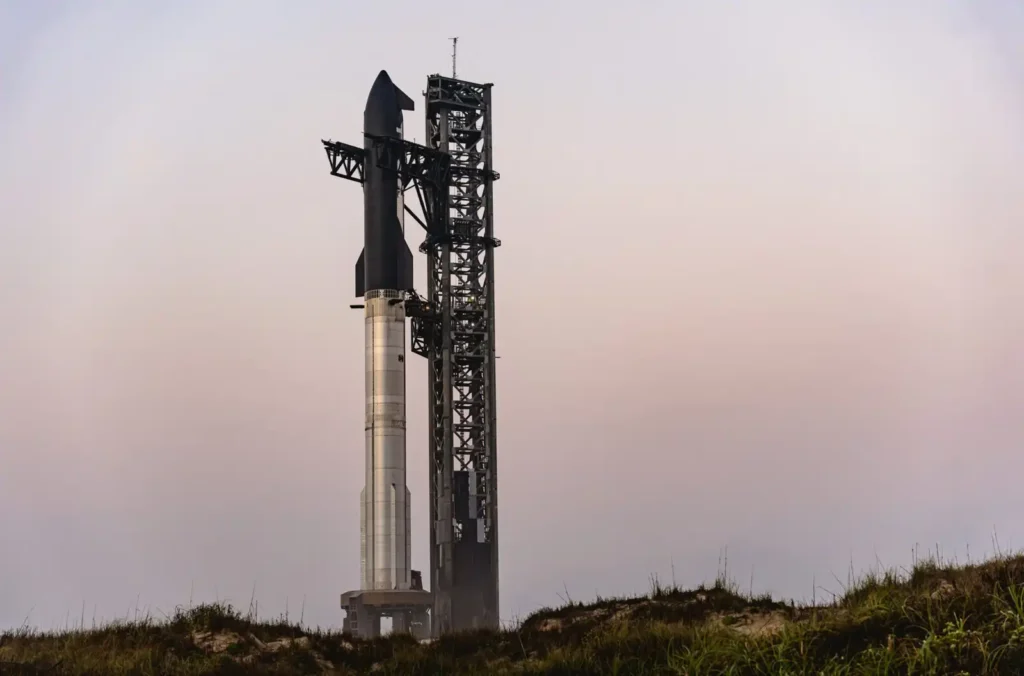
At full scale, the Starship system consists of:
- Super Heavy, the first-stage booster
- Starship, the upper-stage spacecraft capable of carrying crew or cargo
Together, they are designed to lift over 100 tonnes to orbit — a capacity unmatched by any operational rocket today.
What makes Starship different is not only its size, but its purpose. It is being developed to:
- Launch large payloads at lower cost
- Refuel in orbit
- Land on the Moon and Mars
- Be reused rapidly, like commercial aircraft
Every upcoming milestone — from test flights to NASA missions — flows from this design philosophy.
The Current State of Starship Test Flights
From Explosive Tests to Incremental Progress
Starship’s test programme has been highly visible, sometimes spectacularly so. Early flights ended in explosions, but those failures were part of a deliberate strategy: test aggressively, learn quickly, and iterate fast.
Recent Starship test flights have shown clear progress:
- Successful liftoff and stage separation
- Improved control during ascent
- Increasingly stable re-entry phases
- Partial success in splashdowns or controlled descents
Each flight generates vast amounts of data, allowing engineers to refine heat shields, engines, flight software, and structural components.
This approach contrasts with traditional aerospace development, where systems are often perfected on the ground before flight. SpaceX instead treats flight tests as essential development tools.
What Future Test Flights Aim to Prove
Upcoming Starship test flights are expected to focus on several critical goals:
- Orbital reliability
Reaching orbit consistently — and returning safely — is essential before Starship can be trusted with crew or high-value missions. - Controlled re-entry and landing
Starship must survive extreme heat and stress during atmospheric re-entry. Perfecting heat shield durability and descent control remains a top priority. - Booster recovery and reuse
Catching the Super Heavy booster using launch tower arms is a key innovation. Regular, safe recovery is vital for rapid reuse. - In-orbit refuelling demonstrations
This capability underpins Moon and Mars missions, allowing Starship to refuel after launch rather than carrying all propellant from Earth.
Each of these steps moves Starship from experimental hardware toward an operational spacecraft.
SpaceX and NASA’s Artemis Moon Missions
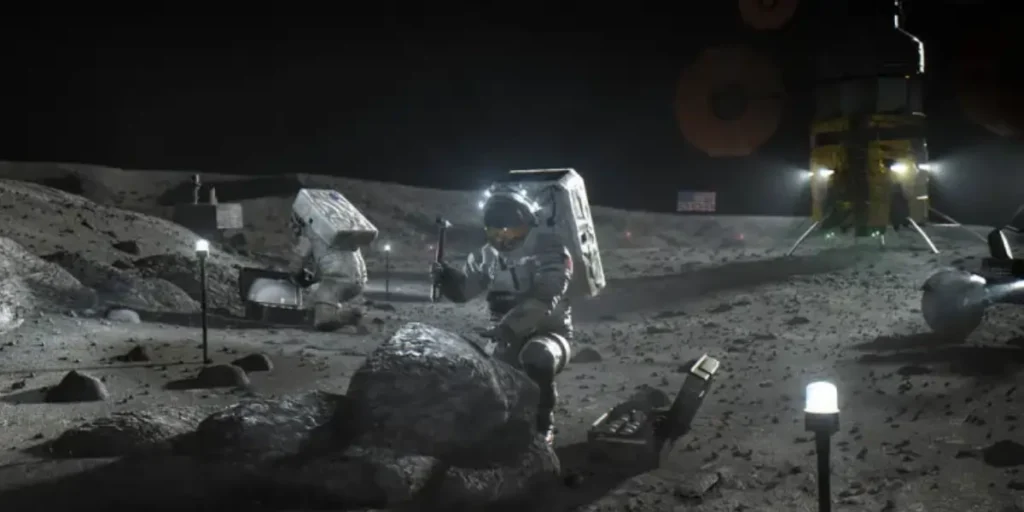
Starship as the Artemis Human Landing System
NASA selected a modified version of Starship as the Human Landing System (HLS) for Artemis missions, marking a major shift in how lunar landings will be conducted.
Unlike the Apollo-era landers, the Starship HLS:
- Remains in lunar orbit rather than launching directly from Earth
- Is refuelled in space before heading to the Moon
- Is designed for multiple missions, not one-off use
For Artemis III and subsequent missions, Starship is expected to carry astronauts from lunar orbit to the Moon’s surface and back again.
This makes SpaceX a central partner in NASA’s return to the Moon.
Challenges Still to Overcome
While the concept is ambitious, several hurdles remain before Starship can safely land astronauts on the Moon:
Human-rating the system
NASA requires extremely high safety standards for crewed missions. Starship must demonstrate consistent reliability.
Lunar landing precision
Landing a vehicle of Starship’s size on uneven lunar terrain presents unique challenges, especially with plume effects kicking up dust and debris.
Complex mission choreography
Artemis missions depend on multiple Starship launches, orbital refuelling, and precise timing between spacecraft.
NASA and SpaceX are working closely to address these challenges, but progress depends heavily on the success of upcoming Starship test flights.
How Starship Changes the Moon Mission Equation
From Short Visits to Sustained Presence
Earlier Moon missions focused on brief surface stays. Starship changes what’s possible by delivering far more cargo and equipment.
This opens the door to:
- Longer crewed missions
- Larger habitats and science equipment
- Infrastructure for future lunar bases
Starship’s payload capacity allows NASA to think beyond symbolic landings and toward long-term operations on the Moon.
Supporting Lunar Science and Industry
Beyond human exploration, Starship could support:
- Deployment of lunar rovers and laboratories
- Construction materials for surface structures
- Experiments related to resource utilisation, such as extracting water ice
These capabilities align with broader international efforts to treat the Moon as a stepping stone rather than a destination.
Mars: The Long-Term Goal Driving Everything
Why Mars Matters to SpaceX
Mars has always been the underlying motivation behind Starship. While Moon missions are important, they serve a larger purpose: proving the systems needed for interplanetary travel.
Mars presents challenges far beyond those of lunar missions:
- Months-long travel times
- No quick return to Earth
- Thin atmosphere and extreme temperatures
- Total reliance on self-sufficiency
Starship is designed specifically to meet these challenges, from its size and propulsion system to its ability to refuel using local resources.
Building the Path to Mars, Step by Step
Rather than jumping straight to crewed Mars missions, SpaceX is following a phased approach:
Earth orbit operations
Proving launch, recovery, reuse, and refuelling.
Lunar missions
Testing deep-space navigation, long-duration life support, and surface operations.
Uncrewed Mars flights
Delivering cargo and validating entry, descent, and landing on Mars.
Crewed Mars missions
Only after systems have proven reliable without humans onboard.
This gradual progression reflects the reality that Mars exploration is a generational challenge, not a single mission.
The Role of Starlink and Commercial Launches
Funding the Big Vision
Starship development is expensive, and SpaceX relies heavily on revenue from:
- Falcon 9 launches
- Commercial satellite deployments
- Starlink internet services
Starlink, in particular, provides recurring income that helps fund Starship without relying solely on government contracts.
This commercial foundation gives SpaceX greater independence and flexibility than many traditional aerospace programmes.
Starship’s Future Role in Satellite Deployment
Once operational, Starship is expected to:
- Deploy next-generation Starlink satellites
- Launch large commercial payloads at lower cost
- Reduce congestion at launch sites through fewer, higher-capacity launches
This dual-use role — commercial and exploratory — is central to SpaceX’s strategy.
Regulatory, Environmental, and Global Scrutiny
Launch Licenses and Oversight
As Starship flights increase, regulatory approval remains a key factor. Environmental assessments, airspace coordination, and safety reviews all influence launch cadence.
Progress depends not only on engineering success, but on regulatory alignment with national and international authorities.
Environmental Considerations
The scale of Starship operations has raised questions about:
- Launch site impacts
- Noise and wildlife disruption
- Orbital debris and space sustainability
These concerns are increasingly part of the conversation as SpaceX expands its launch footprint.
What the Next Few Years Likely Hold
While timelines can shift, several trends are clear:
- More frequent Starship test flights, with increasing success rates
- Closer integration with NASA’s Artemis schedule
- Expanded infrastructure at launch and landing sites
- Gradual transition from Falcon rockets to Starship
Each successful milestone reduces risk and builds confidence in Starship as a multi-purpose space vehicle.
Conclusion: A Pivotal Moment for SpaceX and Spaceflight
SpaceX stands at a turning point. Starship is no longer just an experimental idea — it is actively shaping the future of lunar exploration, influencing NASA’s plans, and laying the groundwork for humanity’s first steps toward Mars.
The coming years will be defined by steady, sometimes uneven progress rather than dramatic breakthroughs. Test flights will fail, systems will be redesigned, and schedules will shift. That is the nature of developing something this ambitious.
What matters is direction. SpaceX’s path is clear: build a reusable spacecraft capable of operating beyond Earth, start with the Moon, and push outward from there.
For readers watching the future of space unfold, Starship is not just another rocket to track — it is the framework around which the next era of exploration is being built.
Related Posts

Stay Informed With the Latest & Most Important News
Previous Post
Next Post
Previous Post

Next Post









Advertisement