

Now Reading: The James Webb Space Telescope: Peering Millions of Years into the Past
-
01
The James Webb Space Telescope: Peering Millions of Years into the Past

The James Webb Space Telescope: Peering Millions of Years into the Past

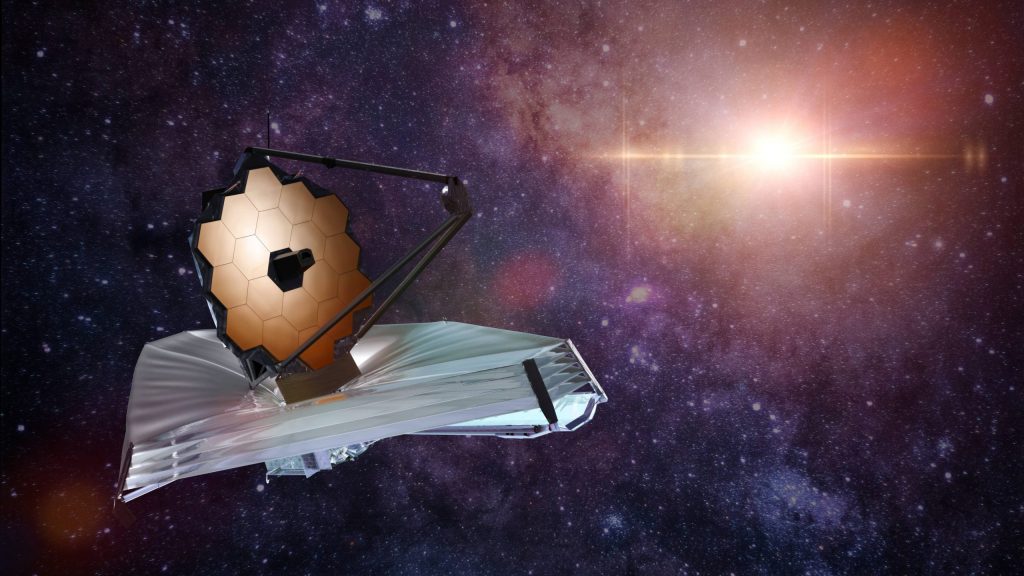
Discover the James Webb Space Telescope (JWST), NASA's cutting-edge observatory unveiling the universe's secrets through infrared imaging.
Imagine gazing at light that left its source when dinosaurs roamed the Earth. The James Webb Space Telescope (JWST), launched in December 2021, makes this possible, allowing us to peer millions—even billions—of years into the universe’s past.
This revolutionary telescope is rewriting our understanding of the cosmos, from the birth of galaxies to the potential for alien life. In this article, we’ll explore how JWST works, its key discoveries, and why it’s a game-changer for astronomy. Ready to dive into the stars? Let’s uncover the secrets of the universe together.
What Is the James Webb Space Telescope?
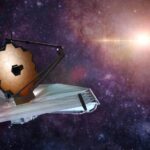
The JWST, often called Webb, is the most advanced space telescope ever built. Designed as the successor to the Hubble Space Telescope, it’s a collaboration between NASA, the European Space Agency (ESA), and the Canadian Space Agency (CSA).
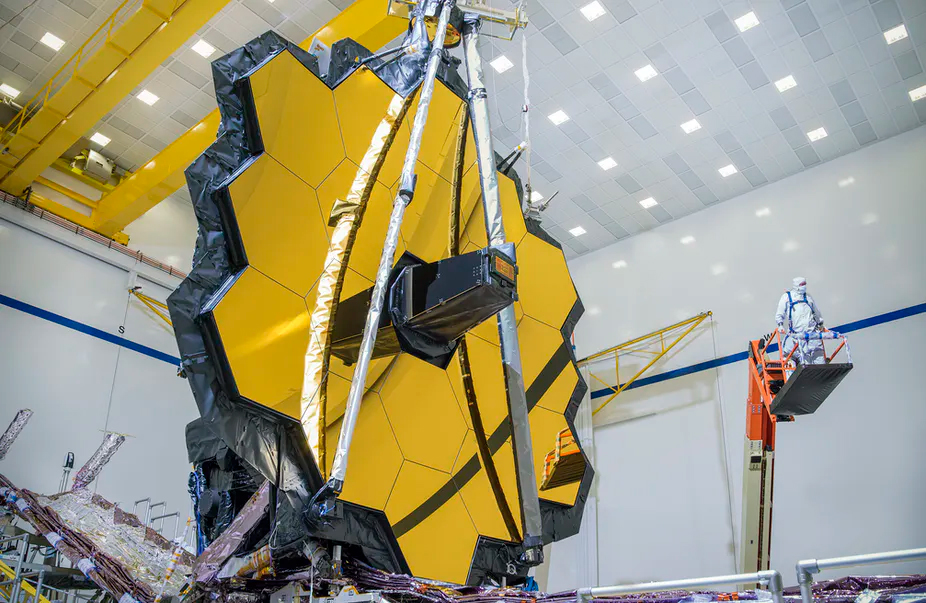
Unlike Hubble, which primarily observes visible light, Webb specializes in infrared observations, allowing it to see through cosmic dust and capture light from the universe’s earliest moments.
- Key Specs:
- Mirror Size: 6.5-meter primary mirror (vs. Hubble’s 2.4 meters).
- Orbit: 1.5 million km from Earth at the second Lagrange point (L2).
- Instruments: Near-Infrared Camera (NIRCam), Mid-Infrared Instrument (MIRI), and more.
- Cost: ~$10 billion, developed over two decades.
- Why Infrared? Light from distant objects is redshifted into the infrared spectrum due to the universe’s expansion. Webb’s infrared capabilities let it observe ancient galaxies, star-forming regions, and exoplanet atmospheres.
How JWST Peers into the Past
When you look at the stars, you’re seeing light that took years to reach Earth. The farther the object, the older the light. JWST’s ability to detect faint infrared signals lets it observe objects so distant their light has traveled for billions of years—essentially looking back in time.
- Light Travel Time: Light from a galaxy 13 billion light-years away shows us what it looked like 13 billion years ago, near the universe’s birth.
- Redshift Explained: As the universe expands, light stretches into longer wavelengths (infrared). Webb’s sensitive detectors capture this ancient light.
- Example: In 2022, JWST imaged galaxies like GLASS-z13, formed just 300 million years after the Big Bang, offering a glimpse of the early universe.
Key Discoveries of the James Webb Space Telescope
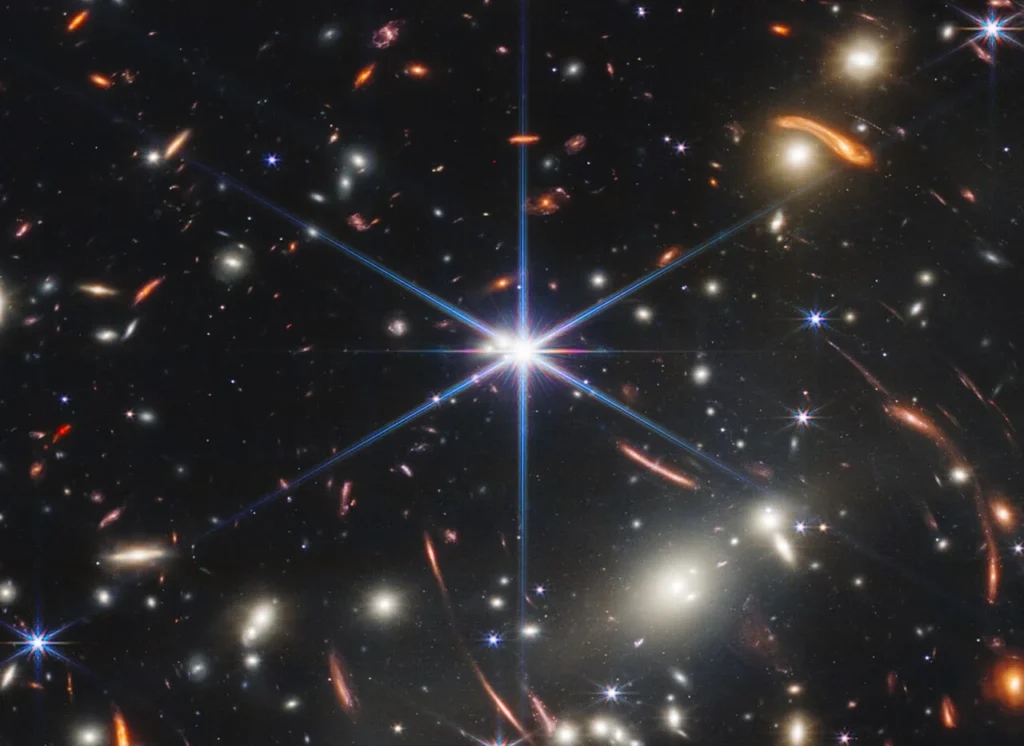
Since its first images in July 2022, JWST has delivered groundbreaking discoveries. Here are some highlights:
1. Early Galaxies and Cosmic Dawn
Webb has spotted galaxies older than any seen before, challenging theories about galaxy formation.
- Discovery: Galaxies like CEERS-93316, observed 235 million years after the Big Bang, suggest rapid galaxy formation.
- Impact: Forces astronomers to rethink how quickly structures formed in the early universe.
2. Star Formation and Nebulae
Webb’s infrared vision pierces dust clouds, revealing stellar nurseries.
- Example: Stunning images of the Carina Nebula show young stars forming in vivid detail, with jets and disks invisible to other telescopes.
- Why It Matters: Helps us understand how stars and planetary systems, like our own, are born.
3. Exoplanet Atmospheres
JWST analyzes the atmospheres of distant exoplanets, searching for signs of habitability.
- Breakthrough: Detected carbon dioxide on exoplanet WASP-39b, a first for exoplanet studies.
- Future Potential: Could identify biosignatures like methane or oxygen, hinting at alien life.
4. Black Holes and Quasars
Webb has captured images of supermassive black holes powering quasars in the early universe.
- Finding: Quasars as early as 800 million years post-Big Bang, suggesting black holes grew faster than expected.
- Significance: Provides clues about the seeds of today’s galaxies.
Why JWST Is a Game-Changer
The JWST isn’t just a telescope; it’s a time machine and a cosmic detective. Its advancements offer unparalleled insights:
- Unprecedented Clarity: Its massive mirror and infrared tech capture details Hubble couldn’t.
- Versatility: Studies everything from nearby exoplanets to the universe’s first stars.
- Public Impact: Stunning images (e.g., the Pillars of Creation) inspire awe and curiosity.
Stat: In its first year, JWST produced over 20,000 images and 700 terabytes of data, fueling thousands of research papers.
Challenges and Limitations
Despite its power, JWST faces hurdles:
- Complexity: Its sunshield and mirror required precise deployment; any failure could’ve been catastrophic.
- Finite Fuel: Expected to operate for 10-20 years, limited by fuel for station-keeping at L2.
- Data Overload: Processing and analyzing its vast data requires global collaboration.
What’s Next for JWST?
The telescope continues to push boundaries. Future missions include:
- Deeper Surveys: Mapping the early universe with projects like COSMOS-Webb.
- Exoplanet Focus: Targeting Earth-like planets in habitable zones.
- Unexpected Discoveries: Webb’s versatility means surprises are likely.
CTA: Want to explore JWST’s latest images? Visit NASA’s JWST website for galleries and updates.
FAQs About the James Webb Space Telescope
- What makes JWST different from Hubble?
Webb observes in infrared, seeing farther and through dust, while Hubble focuses on visible and ultraviolet light. - How far back can JWST see?
Up to 13.5 billion years, close to the Big Bang (~13.8 billion years ago). - Can JWST find alien life?
It can detect potential biosignatures in exoplanet atmospheres but not confirm life. - How long will JWST last?
Likely 10-20 years, depending on fuel and instrument health. - Where can I see JWST images?
Check NASA’s official site or follow @NASAWebb on social platforms.
Conclusion: A Cosmic Legacy
The James Webb Space Telescope is more than a scientific tool—it’s a portal to the universe’s past, revealing secrets about our origins and possibilities for life elsewhere.
From ancient galaxies to potential habitable worlds, its discoveries are reshaping astronomy. Stay curious and keep exploring—follow JWST’s journey on NASA’s site or share your thoughts in the comments below. What cosmic mystery do you hope Webb solves next?
Stay Informed With the Latest & Most Important News
Previous Post
Next Post










Advertisement


SpaceX Starship Launch 8: The Future of Space Exploration: […] SpaceX’s innovation isn’t just about rockets — it’s about opening new frontiers for humanity. As we watch this launch, we get a glimpse of a future filled with exploration, adventure, and discovery. Spaceflight is evolving fast, and Starship’s success will inspire generations to dream bigger. […]